
Wizard School · October 2026
What they talk about
Until this month, people in Wizard School talked the way most sim characters do. Two of them stand near each other, a number goes up, and every so often one insults the other. Friendships took ages and all looked the same. So this month the social side got some actual content, and you can now read off two people's sheets why they get on.
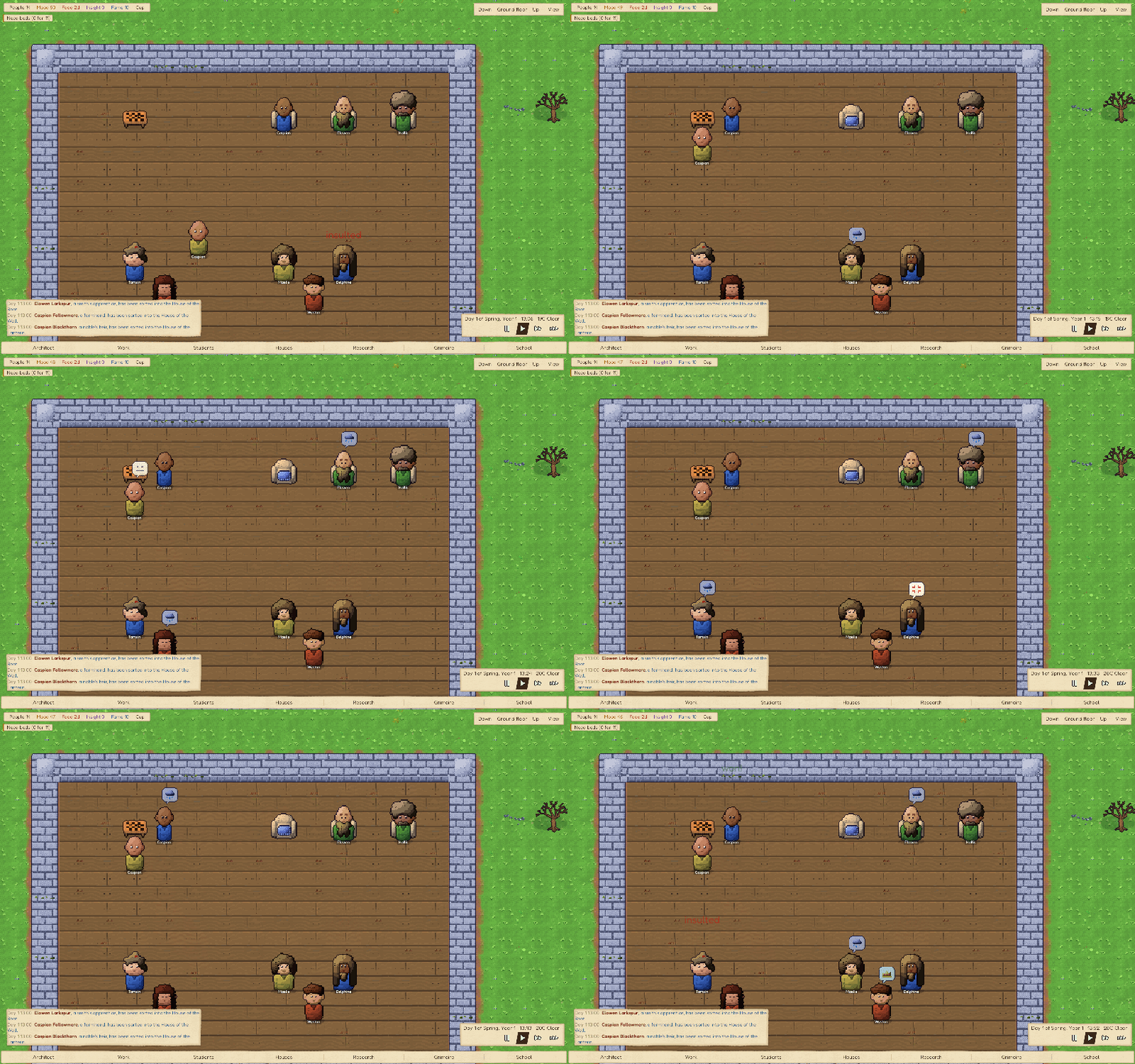
--scene social: a game of chess for two, a knot of talkers, and an apology.
A subject to talk about
Every chat has a subject now, picked from what the two of them have in common:
- a pastime one of them likes (chess, swimming, music, darts...)
- a skill they're both good at
- magic, if both are casters
- their houses
- something that happened to both of them: the ghost they saw, the exams, the feast
If they agree on it they warm to each other almost twice as fast. If one of them loves what the other can't stand, it goes slowly and can end in an argument. The Social tab shows the last thing they talked about, like "Talked with Wren about chess and got on."
Playing together
Chess, checkers and the card games take two players now. Someone sitting alone at a board asks a person over. They pick someone who is free and not already in a good mood, and they prefer someone who likes the game or likes them. The guest walks over ("Joining Hollis: playing wizard chess"), they play it out, and the better player usually wins. People who happen to be doing the same thing side by side, a duet or a swim or a bit of fishing, count as doing it together and get closer for it.
The first chess game never happened. The guest sat down, cheered up within a few seconds and left before the first round. A pastime now lasts at least twenty seconds whether you're enjoying it or not.
Gossip
When something notable happens to someone (they wet themselves, get caught at a prank, win a contest, start walking out with someone), whoever is nearby sees it and thinks better or worse of them. Later, in conversation, they might pass it on. How likely that is depends on who is telling. The inappropriate and the mean-spirited gossip the most, the proper and the good hardly at all. If the listener is a friend of the person being talked about, they hold it against the gossip. And a prefect who hears about a broken rule may do something about it.
Feelings spread
Emotions are catching. One laughing student makes a room playful, one angry student makes everybody near them tense, and fear runs through a crowd. Nurturing and over-emotional people catch feelings easily. Loners and the disciplined mostly don't.
Making up
Someone who insulted or argued with another person may apologise the next time the two of them talk, provided they're warm and even-tempered enough to do it. Whether the apology lands depends on the other person's nature and on how charming the one apologising is. If it's accepted, the old wrongs are forgiven on both sides. If it's refused, it stings. A friend of two rivals can also step in and make peace between them, and that goes in the chronicle.
Circles and clubs
Three or more people who are all friends with each other become a named circle ("Wren's set"). A student with no friends at all, in a school that has circles, feels left out. The headmaster can also found clubs from the Policy panel: a chess club, a choir, a swimming team and so on. Students who like the pastime join, and so do lonely ones who at least don't mind it. The club meets every other evening to play together and train for the contests.
Did it work
I ran the same two schools for sixteen days before and after. Friendships went from 17 and 7 to 35 and 29. One school finished with four circles and two peacemakings. Apologies happen a lot more often than the chronicle suggests, because only an apology between rivals gets written down.